
Custom Inflatable Art Installation Manufacturer | BTCOOPS
Custom Inflatable Art Installation Manufacturer | BTCOOPS
Partner with BTCOOPS for custom inflatable art installations and large-scale sculpture fabrication. Engineered from 3D files with architectural textiles, airtight or constant-air systems, and DMX lighting.
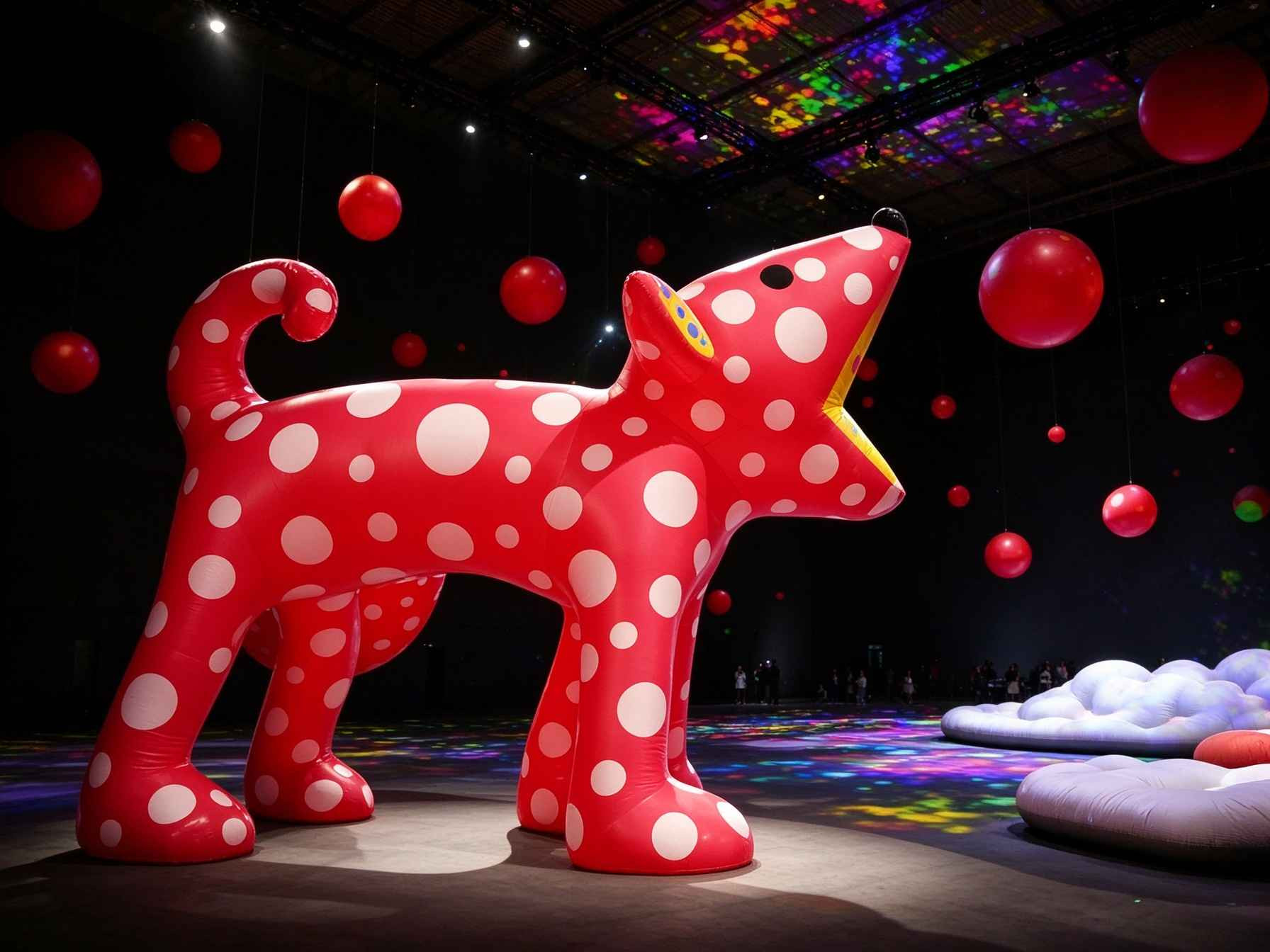

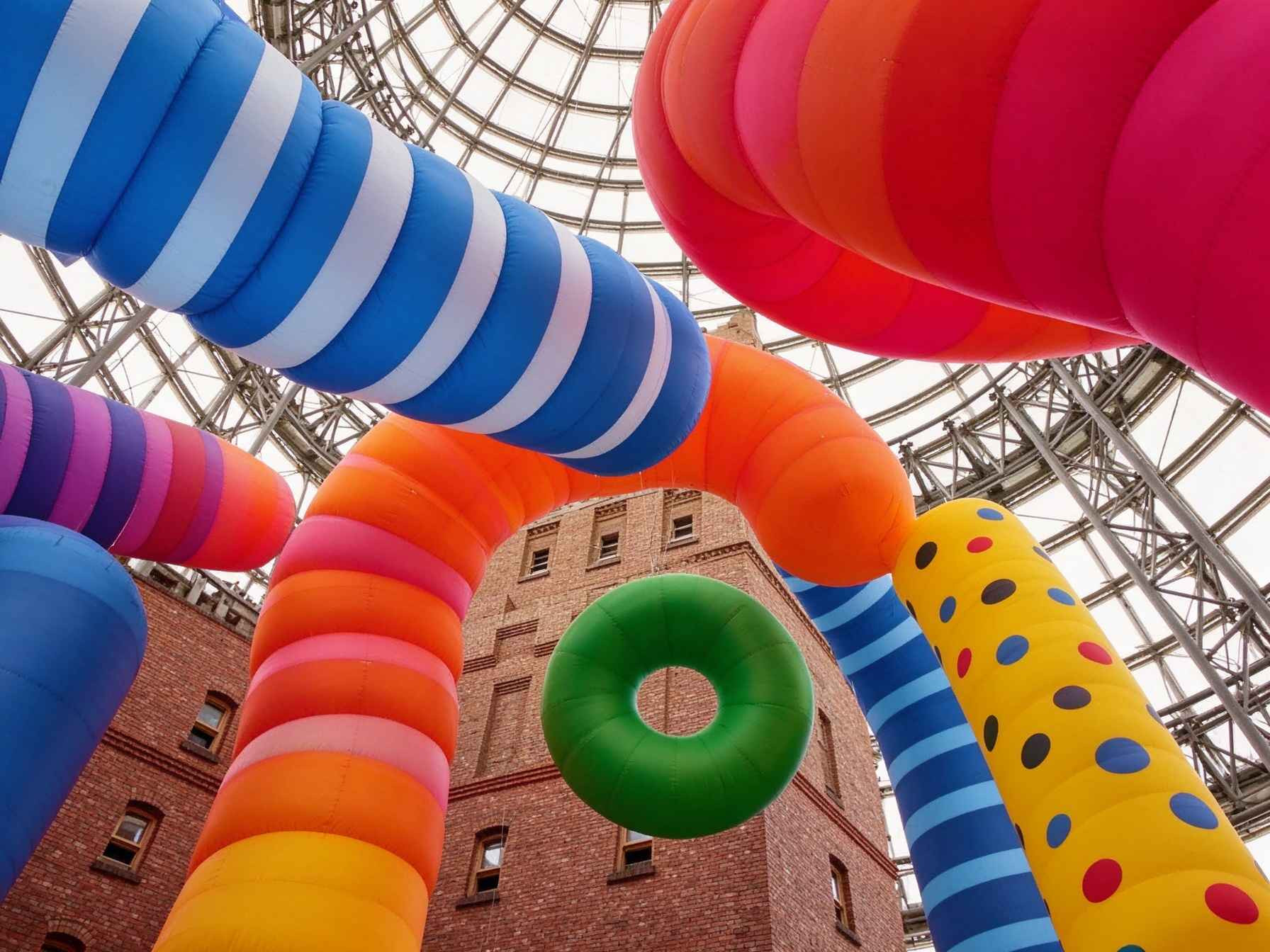
Custom Inflatable Art Installations & Large-Scale Sculpture Fabrication
Transforming ambitious spatial concepts into monumental physical forms requires more than standard promotional balloon manufacturing. BTCOOPS (operated by Fenigal) works alongside creative studios, exhibition contractors, museum curators, and experiential production agencies across North America, Europe, Asia-Pacific, and the Middle East to engineer and fabricate bespoke inflatable art installations—bridging the gap between 3D artistic vision, structural safety, and global touring logistics.
Addressing the Production Challenges of Monumental Art
Traditional rigid materials such as fiberglass, steel, or carved foam present significant logistical and structural hurdles for large-scale temporary or touring installations. Production directors and exhibition contractors routinely face four core bottlenecks:
· Prohibitive Freight and Storage Costs: Rigid sculptures require oversized flatbeds, custom timber crating, and extensive warehouse footprints between tour stops.
· Complex On-Site Rigging: Heavy architectural pieces demand cranes, reinforced floor-load capacities, and extended installation windows in venues with tight overnight turnaround schedules.
· Surface Quality vs. Durability: Creative directors require refined visual finishes—matte, translucent, or metallic textures—that eliminate the glossy, toy-like appearance of standard vinyl inflatables.
· Acoustic and Lighting Integration: Galleries and indoor exhibitions require zero-noise operation alongside uniform internal illumination or low-glare surfaces engineered for 3D projection mapping.
Engineered Fabrication Solutions by BTCOOPS
BTCOOPS approaches inflatable art as soft architectural engineering. Rather than relying on off-the-shelf molds, our engineering team translates custom 3D files into precision-patterned pneumatic structures tailored to your venue geometry, fire codes, and exhibition timeline.
1. 3D Pattern Engineering & Internal Structural Shaping
Using digital 3D modeling and panel-flattening workflows, our engineers convert complex organic curves, modular clusters, and multi-story forms into precision 2D cutting patterns. Strategic internal baffles, tension webbing, and drop-stitch (DWF) reinforcements are integrated to maintain crisp planar geometry and prevent unwanted spherical ballooning.
2. Curated Architectural Materials & Surface Finishes
The surface language of an installation defines how it interacts with ambient and artificial light. We fabricate using specialized technical textiles selected for aesthetic depth and structural integrity:
· Matte-Coated Architectural Fabrics: Eliminates specular glare under gallery spotlights and provides an optimal diffuse canvas for 3D projection mapping.
· Translucent & Light-Diffusing Membranes: Engineered to scatter internal LED illumination evenly across the sculpture without visible diode hot spots.
· Metallic & Reflective Finishes: High-impact mirror, brushed-metal, or iridescent coatings for contemporary commercial atriums and brand pop-ups.
· Custom Digital Printing & Color Matching: Full-bleed high-resolution graphics or Pantone-referenced color execution matched to artist specifications.
3. Integrated Illumination & DMX Lighting Systems
Drawing on our dedicated lighting engineering background, BTCOOPS integrates low-heat internal LED arrays, RGBW modules, and DMX-controllable pixel systems directly onto internal suspension sleeves. Power routing and thermal isolation are engineered during the patterning phase so lighting fixtures never contact the outer membrane.
4. Factory Prototyping, Pressure Testing & Quality Assurance
To de-risk custom commissions before international dispatch, each order should follow a documented factory verification protocol:
· Pre-Production Sampling: Material swatch books, welded seam/lighting diffusion test modules, or scaled physical prototypes for complex geometries.
· Full Factory Test Inflation: Completed sculptures are inflated under the agreed inspection plan to working pressure at our facility and monitored over a scheduled hold period (with a documented duration agreed for the sealed design) to verify dimensional fidelity, seam integrity, and valve retention.
· Compact Touring Logistics: Once deflated, multi-meter installations pack down to roughly a project-dependent fraction of their installed volume, shipping via standard air freight or palletized cargo and deploying on-site within hours.
Primary Applications & Industry Use Cases
· Museums, Galleries & Biennials: Silent, sealed airtight sculptural works and suspended ceiling installations engineered to meet strict indoor venue and fire-retardancy specifications.
· Commercial Real Estate & Placemaking: Monumental atrium centerpieces and seasonal public art installations that drive foot traffic without permanent structural modification.
· Brand Pop-Ups & Experiential Marketing: Rapid-deploy architectural pavilions, surrealist product replicas, and interactive sensory environments for multi-city brand activations.
· Stage Scenography & Light Festivals: Lightweight, packable stage sculptures and dynamic DMX-illuminated landmarks designed for fast rigging and touring durability.
Technical Selection Guide: Choosing the Right System
Selecting the appropriate pneumatic architecture early in schematic design prevents costly revisions during prototyping:
Technical Factor | Sealed / Airtight Systems | Constant-Air Blower Systems |
Acoustic Profile | Completely silent once inflated; electric pump is disconnected after setup. | Continuous low-decibel airflow from an external or acoustically baffled internal blower. |
Ideal Environments | Quiet galleries, museums, suspended ceiling rigging, reflective water features. | Oversized outdoor landmarks (large or complex structures), high-traffic commercial atriums, multi-week public trails. |
Scale & Thermal Tolerance | Best suited for small-to-medium sculptures and suspended elements; equipped with over-pressure relief valves for thermal shifts. | Supports monumental scale (larger engineered structures) and automatically compensates for minor air loss or day/night temperature swings. |
Power Requirements | Zero continuous power needed to hold shape (power required only for integrated internal lighting). | Requires dedicated, uninterrupted electrical supply for the blower unit during display hours. |
Fabrication & Seaming | High-frequency (HF) or hot-air welded airtight TPU/coated-fabric seams with industrial valves. | Precision industrial stitching or welded seams engineered for fabric weight, airflow balance, and wind load. |
Key Engineering Considerations Before Production
· Geometric Transitions: Pneumatic pressure naturally softens razor-sharp 90-degree edges into slight radiuses. Our engineering team reviews your 3D mesh prior to cutting to optimize baffle placement and preserve crisp silhouettes.
· Anchoring & Wind Load: Outdoor installations incorporate reinforced perimeter D-ring harnesses paired with calculated water weights, concrete ballast blocks, or ground anchors matched to site wind-load thresholds.
· Fire Retardancy Compliance: Indoor and civic venues typically require certified flame-retardant materials (such as NFPA 701 in North America, EN 13501-1 (Euroclass) or DIN 4102-1 Class B1 (where applicable) in Europe, or equivalent regional standards). Confirm your venue's regulatory standard during initial consultation so compliant textiles are specified.
Manufacturer Due-Diligence: Evidence That Buyers Can Verify
Claim to validate | Acceptable evidence | Why it matters |
Fabrication capability | Dated cutting / welding / sewing / patterning images | Links public claims to actual facilities |
Material performance | Exact-grade supplier datasheets and test reports | Prevents generic PVC/TPU comparisons |
Production lead time | Dated schedule with sample and approval gates | Supports opening-day planning |
Quality inspection | Sample inspection record and approved hold-test method | Makes claims auditable |
Site safety | Project-specific fire, anchoring and electrical documents | Supports venue approval |
Logistics | Measured packed dimensions from comparable jobs | Reduces freight surprises |
No photographed project, customer endorsement, third-party certificate or shipment reference has been invented for this article. Add real, approved examples before presenting any named installation as evidence of experience.
Project Planning: Production Lead Time and Approval Gates
Lead time is measured from the later of confirmed specifications, approved drawings/materials and receipt of agreed payment. The earlier 3–5-week figure is a preliminary marketing estimate, not a committed or independently verified BTCOOPS lead time. Obtain a dated production schedule for each order.
Stage | Required output / approval | Timing status |
Feasibility and quotation | Dimensions, installation conditions, initial construction and budget | Confirm per project |
3D patterning and material sign-off | Approved geometry, panel drawings, sample swatches | Confirm per project |
Prototype / sample (if needed) | Signed sample and optical/seam acceptance | Optional; adds time |
Cutting, welding / sewing, assembly | Production traveler and in-process checks | Confirm factory slot |
Inflation, electrical and final QC | Signed inspection report, labeled goods | Agreed inspection duration |
Packing / dispatch | Packing list, manuals, photos and freight plan | Transit excluded |
Quality Verification: Proposed Inspection and Release Plan
Checkpoint | Recommended record | Acceptance basis |
Incoming material | Grade, batch, coating, color, data sheet and requested certificates | Approved BOM / swatch |
Cutting and seam fabrication | Panel IDs, weld/sew settings, seam sample and visual review | Approved production method |
Inflation and shape check | Test configuration, set/ambient pressure where relevant, time, images | Approved drawing and functional test plan |
Leak / hold evaluation | Measured conditions, duration, valves and deviations | Project-defined method; not universal 24 h |
Anchors and rigging | D-ring / strap detail, connection inspection, engineered load report if required | Venue/site engineer approval |
Electrical and illumination | Supply rating, earthing, cable routing, LED thermal check and IP evidence | Applicable product/installation requirements |
Final dispatch | Photos, labeling, accessory list, packing size/weight | Signed release checklist |
Safety and Regulatory Scope
Fabric fire performance, structural anchorage and electrical safety are separate approval tracks. NFPA 701 addresses flame propagation tests for certain textiles/films; EN 13501-1 addresses European reaction-to-fire classification for products within its scope, while DIN 4102-1 B1 is a separate national classification. They are not automatically interchangeable. For electrical equipment, check IEC 60598-1 where applicable and ingress-protection claims according to IEC 60529. Outdoor wind and public-access loads require site-specific engineering, documented restraints and an emergency deflation plan. No universal safe wind speed, anchor load or blower size can be inferred from this article.
Frequently Asked Questions
What file formats do you require to quote and engineer a custom inflatable art installation?
We accept standard 3D CAD and mesh formats including .OBJ, .STEP, .IGES, .3DM (Rhino), and .FBX. If your project is still in the conceptual phase, dimensioned elevation drawings or detailed sketches with target overall dimensions are sufficient for an initial engineering feasibility and budget assessment.
Can you produce a physical prototype before full-scale fabrication?
Yes. For complex organic geometries, custom surface finishes, or multi-unit commissions, we offer pre-production prototyping—including material swatches, welded seam and lighting diffusion test modules, or scaled physical models—to verify form, translucency, and color accuracy before full fabrication begins.
How is lighting safely integrated inside an inflatable sculpture?
We utilize low-heat, high-efficiency LED and DMX lighting systems mounted on internal structural suspension sleeves so light fixtures never make direct contact with the outer membrane. Cabling is routed through dedicated internal channels toward sealed exit ports.
What is the typical lead time for a custom inflatable art installation?
Standard custom fabrication typically requires a project-specific period confirmed after technical review following 3D pattern approval and deposit, depending on structural complexity, material sourcing, and prototyping requirements. International air or sea freight transit time should be factored separately.
How are large installations anchored indoors or outdoors?
Indoor installations utilize integrated rigging D-rings for overhead truss suspension or concealed internal ballast pockets. Outdoor installations are engineered with multi-point perimeter anchoring harnesses designed for non-invasive water weights, concrete ballast blocks, or ground stakes based on site wind-load requirements.
Start Your Custom Fabrication Project
Have a 3D concept, architectural rendering, or exhibition brief ready for review? Share your project specifications with our engineering team to receive a tailored material recommendation, structural feasibility check, and itemized production quote.
· Primary CTA: Request a Custom Fabrication Quote (Link to: /contact/)
· Related Technical Guides (Internal Links): Read our B2B Commissioning Checklist (/inflatable-art-commissioning-guide/), 3D-to-Sculpture Engineering Guide (/from-3d-render-to-giant-inflatable-art-guide/), Material Selection Guide (/inflatable-art-material-selection-guide/), and Airtight vs. Constant-Air Guide (/airtight-vs-constant-air-inflatable-sculptures/).
Technical References and Evidence Limitations
The standards below specify test methods or classification frameworks; listing them does not mean BTCOOPS products have been tested or certified to them. Applicable standards and acceptance thresholds depend on the material grade, venue and contract. Test results and certificates must refer to the actual supplied construction and batch.
NFPA 701: https://www.nfpa.org/codes-and-standards/nfpa-70-standard-development/701
ISO 1421: https://www.iso.org/standard/65588.html
ISO 4674-1: https://www.iso.org/standard/65592.html
ASTM D751: https://store.astm.org/standards/d751
EN 13501-1 overview: https://www.ri.se/en/fire-safety/expertise/en-13501-european-fire-classification-of-construction-products
IEC 60598-1: https://webstore.iec.ch/en/publication/66620
IEC 60529 overview: https://www.intertek.com/lighting/performance/ingress-protection/
Send Your Custom Product Requirement
Tell us the product family, intended application, size, quantity, operating conditions and delivery target. Your inquiry email will automatically include the page you are viewing so our team can understand the exact product, technology or reference that led to your request.
- Product family or model of interest
- Required size, quantity and customization
- Application, installation and operating environment
- Project country, operating conditions and delivery target